Form fill and seal machinery UK

Form fill seal machines, VFFS machinery and pouch packing equipment for UK production lines.

Compare form fill seal machines for powder, granule, liquid, paste, sachet and pouch packing. Lancing helps specify VFFS machinery around product flow, film, bag size, fill accuracy and required output.

Powder
Auger & multi-lane
Granule
Weighing & back seal
Liquid
Pumps & sachets
Bag size rangeFilm compatibilityProduct dosingSeal integrityLine integration

Built around the pack

Form, fill and seal in one controlled packaging process.

Form fill and seal machinery takes roll-fed film, shapes it through a forming set, doses the product, creates the seals and cuts the finished bag. The correct machine depends on product flow, film type, bag dimensions, seal design, dosing system and the way the pack leaves the machine.

Lancing helps narrow the range from a practical production perspective: product behaviour, output target, operator access, utilities, roll changes, downstream conveyors and date coding.

Machine range

Popular form fill and seal machines

View all machinery
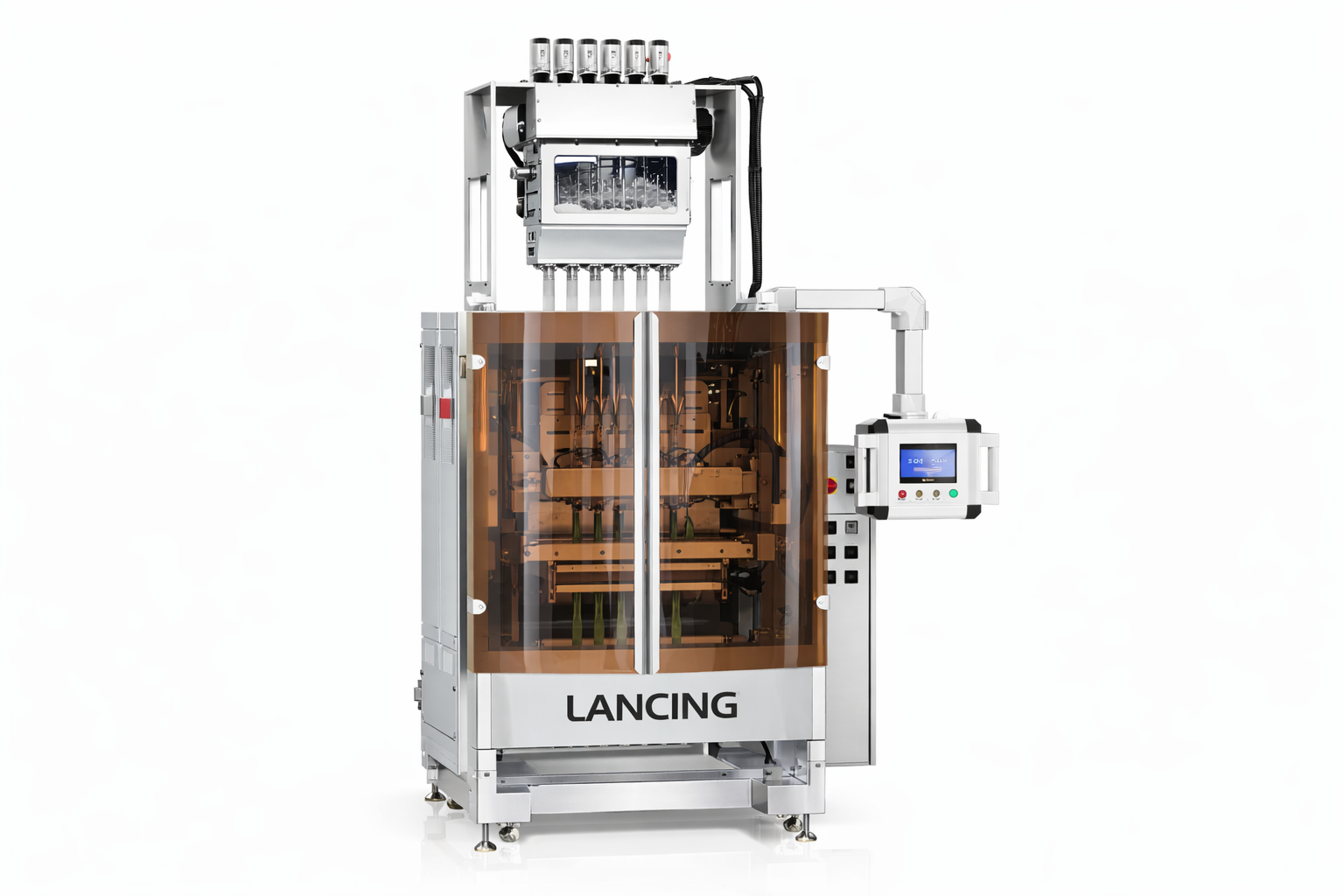
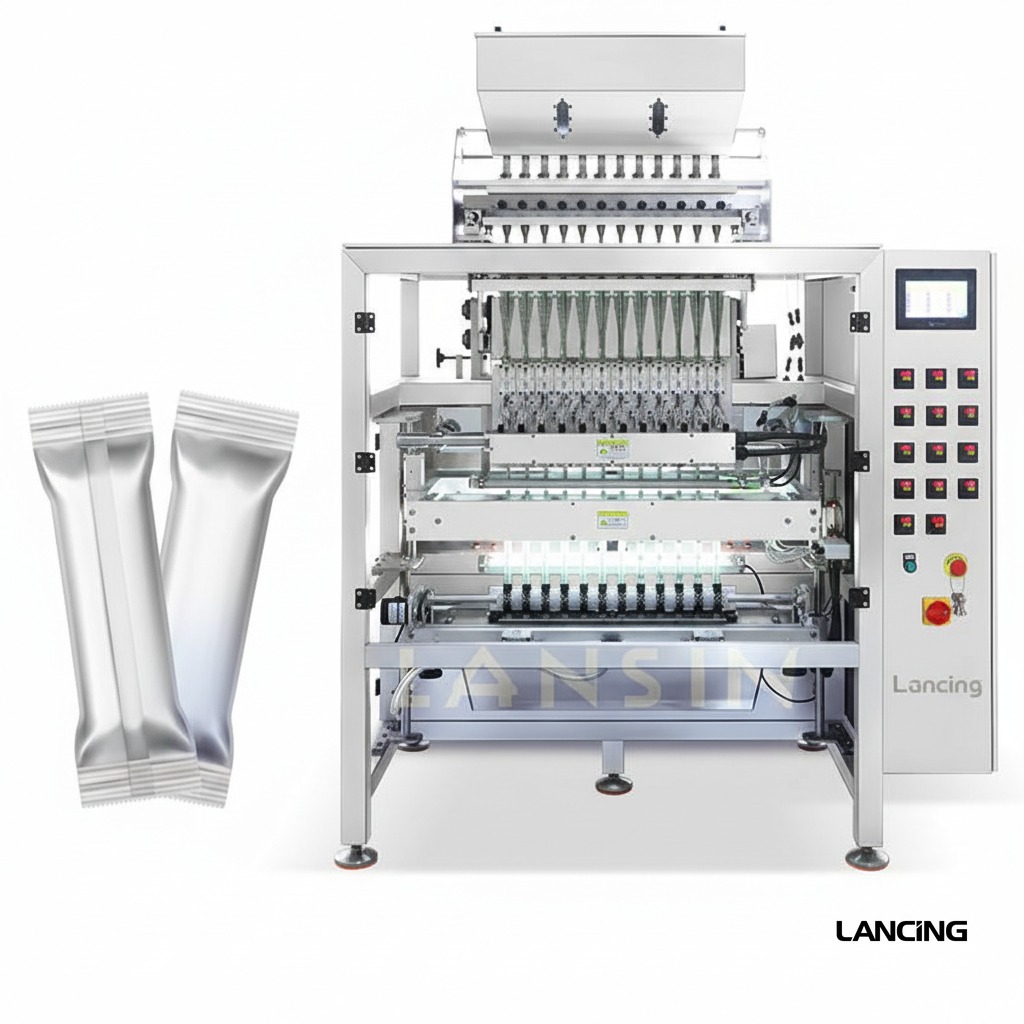
LU-FSFM6 Multi-Lane VFFS Powder Bagger
Powder VFFS

LU-FSFM6 Multi-Lane VFFS Powder Bagger

High-speed multi-lane vertical form fill seal machinery for powder sachets, stick packs and small bag formats, with independent auger dosing across multiple lanes.

Model: LU-FSFM6 · Filling method: Auger filling · Voltage: AC220V/380V 50–60Hz View details
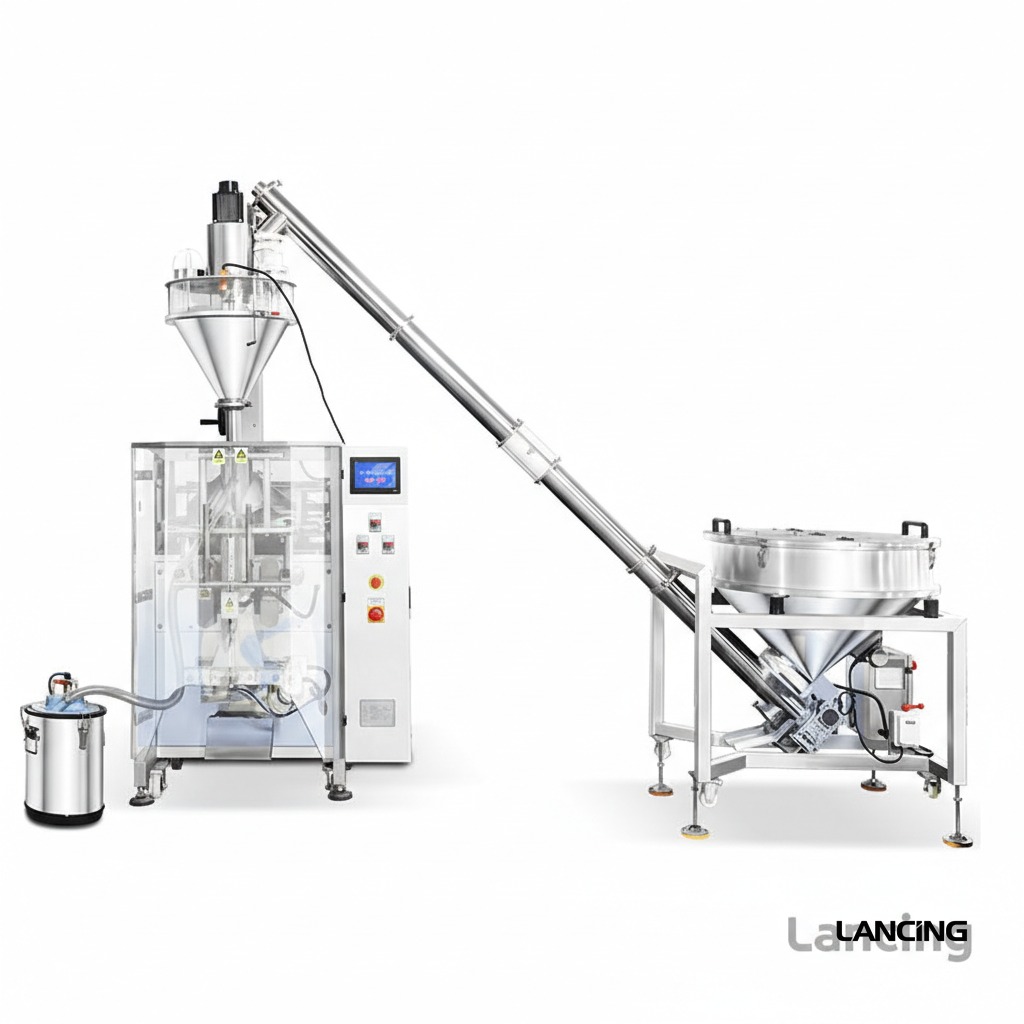
Automatic VFFS Auger Powder Filling Machine
Auger powder bagging

Automatic VFFS Auger Powder Filling Machine

Fully automatic auger filling and form fill seal machine for free-flowing and controlled-flow powders, using screw dosing and film forming for finished bags.

Model: LU-FS06 · Working voltage: 110/220V 50–60Hz · Packaging speed: 5–80 bags/minute View details
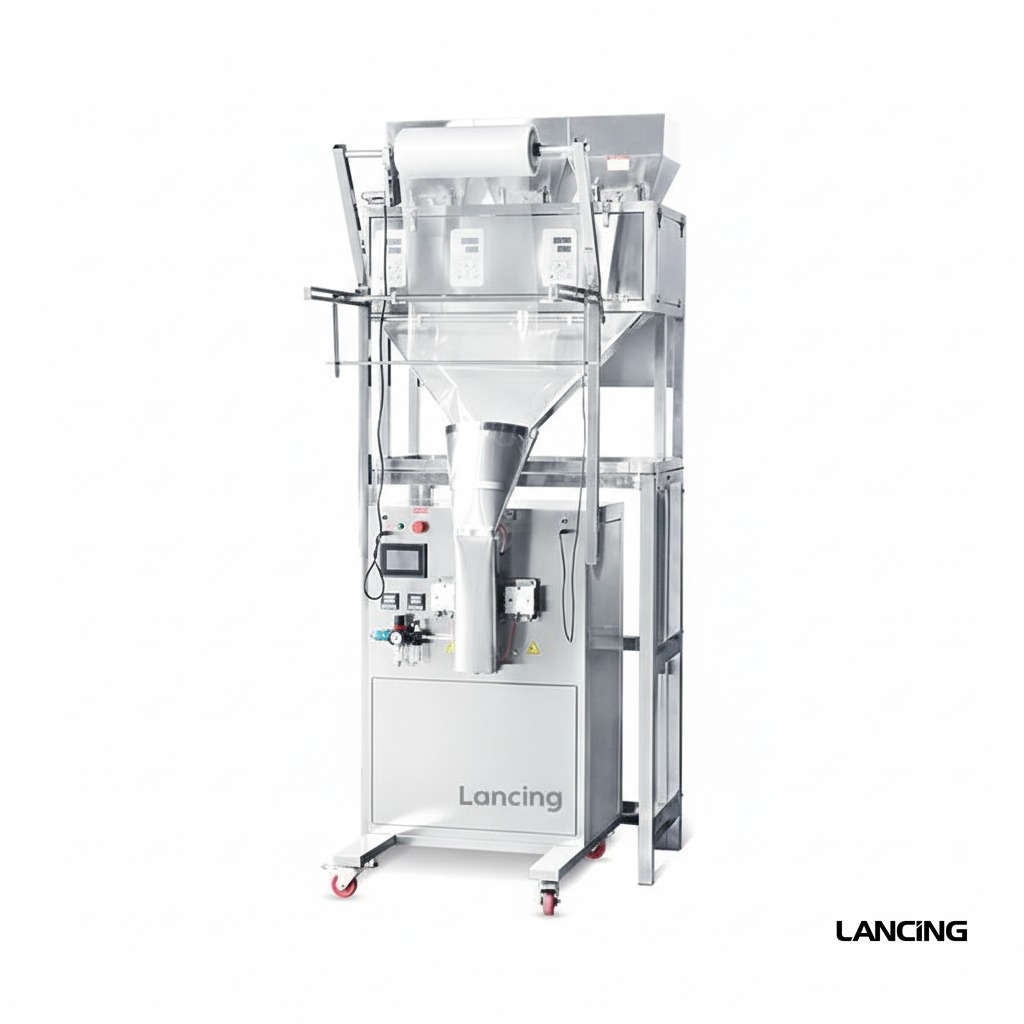
Back Seal Granule Pouch Filling & Sealing Machine
Back seal granule pouches

Back Seal Granule Pouch Filling & Sealing Machine

Back-seal pouch filling and sealing equipment for granules, with controlled filling and practical bag-forming for entry-level or compact automation.

Output: Approx. 20–30 bags/min · Filling range: Approx. 20–1000g customizable · Voltage: 110/220V 50–60Hz View details
Liquid & Paste Filling Sealing Machine
Liquid and paste bagging

Liquid & Paste Filling Sealing Machine

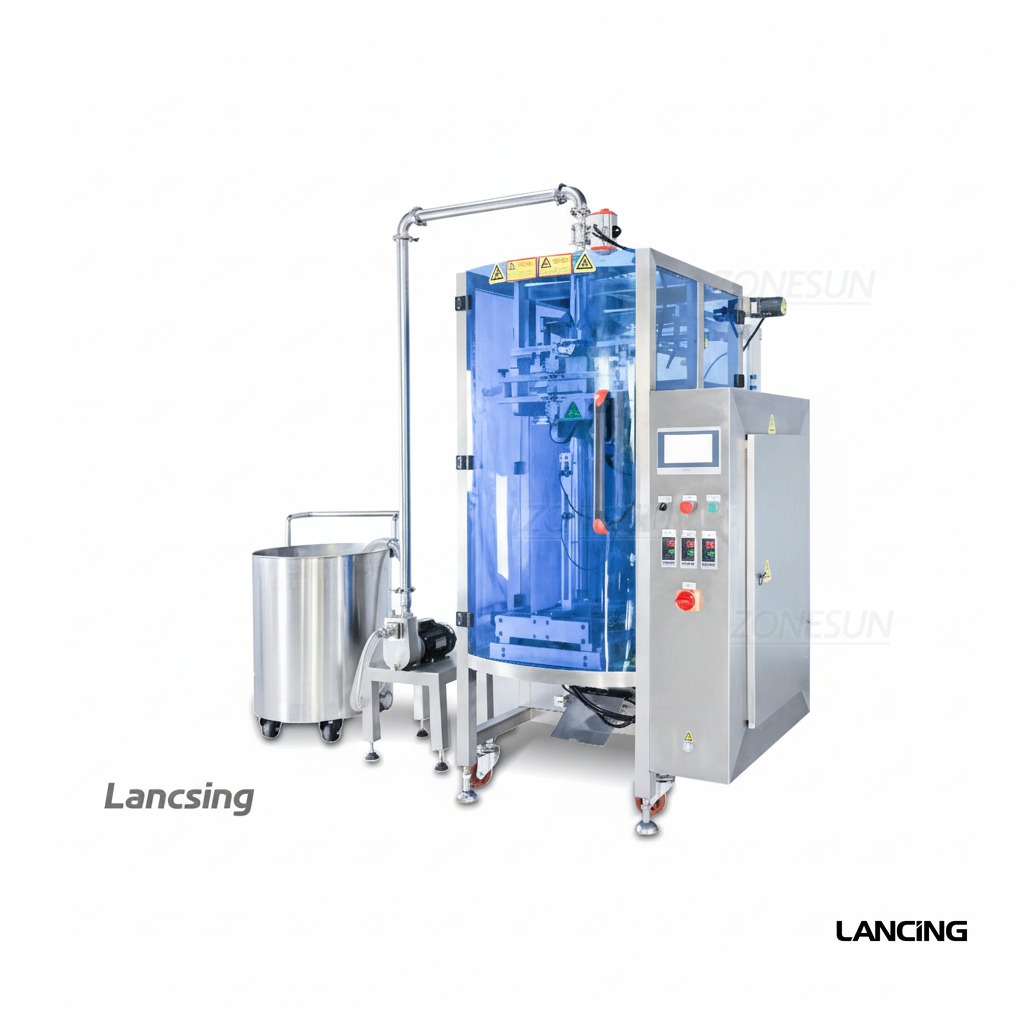
Automatic filling and sealing machinery for liquid and paste products using tank, pump and film sealing components for sauce, gel, cosmetic and chemical packs.

Model: LU-420GSY · Voltage: 380V 50–60Hz · Power: Approx. 5kW View details

How to shortlist

Four decisions shape the right VFFS route

01

Product flow

Powder, granule, paste and liquid products need different dosing systems, hopper geometry and control of dust, drips or product bridging.

02

Bag and film

Confirm width, length, seal type, film structure, roll width and whether the pack needs gussets, rounded corners, coding or tear notches.

03

Output target

Speed depends on product dosing, bag size, seal dwell time, coding, checkweighing, reject handling and changeover pattern.

04

Line layout

Plan upstream feed, conveyors, inspection, operator access, roll loading, maintenance space and downstream pack-off from the start.

Applications

Powders, granules, liquids and paste products.

Use this site to compare common machine routes before sending product samples, pack dimensions and production targets for a practical proposal.

View applications

Improve quotation accuracy

Information that helps specify a form fill seal machine

Product data

  • Powder, granule, liquid or paste
  • Bulk density, particle size or viscosity
  • Flow problems, dust, drips or product bridging

Pack data

  • Fill weight or volume
  • Bag width, length and seal type
  • Film material, roll width and print requirements

Line data

  • Required bags per minute
  • Available voltage, air and floor space
  • Coding, conveyors, checkweighing and reject handling

Form fill and seal machinery supplier for UK manufacturers

Formfillandseal.co.uk is focused on Lancing machinery for vertical form fill seal systems, automatic bag filling, pouch sealing, granule weighing baggers, powder auger baggers and liquid sachet equipment. The aim is to help production managers and engineers compare the right type of machine before moving to a live specification.

Typical enquiry details include product density and flow, pack weight or volume, bag dimensions, film material, target output, available voltage and air, required coding, downstream conveying and any quality checks such as checkweighing or metal detection.

Form fill seal machinery FAQs

Common questions before specifying a VFFS machine

What is form fill and seal machinery?

Form fill and seal machinery forms packaging film into a bag or pouch, fills it with product and seals the finished pack in a controlled process.

Which products can be packed on VFFS machinery?

VFFS machinery is commonly used for powders, granules and liquid sachets when the product can be consistently dosed into a bag-forming and sealing process.

What information is needed for a quote?

Provide product type, pack size, film specification, target output, available utilities, site space and whether coding, checkweighing or downstream conveyors are needed.

Get a practical shortlist

Send bag size, product, film and output target.

Request machinery advice

Engineering the complete pack

How a form fill and seal project is engineered

Start with product behaviour and the dosing system

A vertical form fill seal machine can only make consistent packs when the dosing method matches the product. Cohesive powders may need an auger and controlled hopper agitation; free-flowing granules may suit weighing or volumetric dosing; liquids and pastes require a pump selected around viscosity, particulates, temperature and clean-down. The useful starting point is a representative product sample together with the intended fill weight or volume, rather than a machine speed in isolation.

Control the film web through forming and sealing

Roll-fed film passes through tension control and over a forming shoulder before the vertical seal and horizontal seals create the pack. Film thickness, stiffness, sealant layer, coefficient of friction and roll quality all affect tracking. Printed film also needs a clear registration mark, stable sensor contrast and enough repeat length for the intended bag length and cut position.

Treat coding, inspection and discharge as part of the line

Date or batch coding must be positioned where the film is stable and the print remains clear after forming. A complete specification can also include discharge conveyors, checkweighing, metal detection, reject handling and finished-pack collection. Confirming interfaces early reduces avoidable height, access and control changes after the bagger has been selected.

Define an acceptance method before ordering

A practical trial records the product batch, ambient condition, target dose, film construction, roll width, pack dimensions and test duration. Finished packs can then be checked for dose variation, registration, seal continuity, cut position, coding and repeatable start-up. Published machine data is a useful shortlist, but the agreed application trial should determine the final configuration.

Technology selection

Select the route by product and pack requirement

This matrix is a selection starting point. Final dosing, film and sealing choices should be confirmed with representative samples and the required production conditions.

Product or pack conditionLikely dosing route to assessImportant trial checks
Fine or cohesive powderAuger dosing with managed product feedBulk density, dust, screw selection, dose repeatability and powder on the seal area
Free-flowing granulesWeighing, volumetric or multi-lane dosingParticle size, breakage, bridging, target tolerance and discharge control
Thin liquidPump dosing selected around flow and compatibilityDrip control, temperature, foaming, seal contamination and clean-down
Viscous paste or gelPositive-displacement or application-matched pumpStringing, particulates, product temperature, nozzle shut-off and seal cleanliness
Printed roll-fed filmPhotocell-controlled bag lengthRegistration-mark contrast, film stretch, tracking, cut position and code location

Buyer questions

Additional form fill and seal project questions

What sample information is most useful before a VFFS trial?

Send a representative product sample, target fill weight or volume, finished bag dimensions, film specification or sample roll, required output, coding requirement and available power and compressed air.

Why can the same product need a different machine setting?

Bulk density, particle size, moisture, viscosity, temperature and film construction can change feed behaviour, dose time and seal performance even when the product name is unchanged.

How should printed film be assessed?

The trial should confirm registration-mark contrast, sensor position, repeat length, film tracking, bag length, cut position and whether the coding area remains stable through the forming path.

Is the highest catalogue speed the right selection target?

Not necessarily. A useful target is the repeatable accepted output achieved with the real product, film, dose tolerance, seal checks and downstream equipment operating together.

What utilities should be confirmed?

Confirm supply voltage, phase, frequency, compressed-air pressure and demand, extraction where required, product-feed height, drainage or wash-down needs and the available floor space.

When is another packaging format more suitable?

Pre-made pouches may be preferable where the pouch format is the main presentation requirement, while horizontal flow wrapping is a different process for products that travel through a horizontal wrapper. The selection should follow the product and finished-pack requirement.

Application review

Prepare a sample-led form fill and seal assessment.

Contact Lancing

Project routing

Use one owner page for each machinery decision

Keep roll-fed form, fill and seal selection on this site

Formfillandseal.co.uk is the owner for projects where the machine forms a bag from reel material, doses the product, creates the vertical and horizontal seals and cuts the finished pack. The strongest starting points are the vertical form fill seal machine guide, the current machine range and the VFFS process guide. Those pages connect film-web control, the forming shoulder, bag length, sealing, coding and product dosing as one packaging process.

Route dosing-first questions to the specialist owner

A bagging project can contain a separate dosing question. Standalone powder filling and dry-product dosing are covered in more depth by Powder Fillers UK and Auger Fillers UK. Granule projects that are primarily about target-weight combination weighing should use Combiweigh UK. This site remains the correct owner when that dosing system must be integrated with roll-fed bag forming, registration, sealing and finished-pack discharge.

Separate roll-fed bags from other flexible-pack routes

Where the pack is already manufactured, opening and handling the pouch becomes the core process, so Pouch Fillers UK is the more specific owner. Format-led sachet research belongs with Sachet Filling Machines UK. Products that travel horizontally through a wrapper belong with Flow Wrapping Machines UK. Keeping these boundaries clear helps buyers compare the correct machinery process instead of treating every flexible pack as the same application.

Decision map

Start with the question that controls the project

Use the evidence column to prepare a more useful enquiry before comparing machinery.

Controlling questionStrongest ownerEvidence to prepare
Can the product be dosed and sealed in a bag formed from reel material?Vertical form fill seal machinesRepresentative product, finished bag drawing, complete film construction, target dose and accepted output.
Which screw, hopper or agitation arrangement suits a powder?Auger Fillers UKBulk-density range, flow and dust behaviour, target weight, tolerance and clean-down requirement.
Should free-flowing product be portioned by combination weighing?Combiweigh UKParticle size, breakage sensitivity, target weight range, mix requirement and required discharge rate.
Is the project based on a pre-made pouch rather than roll film?Pouch Fillers UKPouch samples, opening dimensions, gusset, zip or spout details, seal area and product behaviour.
Does a discrete product need horizontal wrapping?Flow Wrapping Machines UKProduct dimensions, orientation, infeed pattern, film, pack length and sustained upstream rate.

Complete-line specification

Turn the product and pack brief into one testable line requirement.

Include representative samples, film, accepted-output criteria, quality checks, site utilities and downstream handling so the proposal can be assessed as a production system.

Send project details

Buyer decision questions

Questions that should be settled before the machinery shortlist

What should be fixed first: the product dose, the bag or the machine speed?

Fix the acceptable pack and dosing requirement before treating speed as the deciding figure. The product must be portioned consistently, the film must form and seal, and the finished bag must pass the agreed checks. Only then can the project compare repeatable accepted output rather than an empty-cycle or peak machine rate.

Why is a product name alone not enough to select a form fill seal machine?

A product name does not describe bulk density, particle shape, dust, aeration, viscosity, temperature, foaming or how the material changes during storage. Those properties control the dosing method, hopper and feed arrangement, product-clear time and seal-contamination risk, so representative samples and production conditions are needed alongside the product description.

When should a buyer send both filled packs and empty film samples?

Send both when the finished presentation and the reel material are already defined. Filled packs show the required shape, headspace and handling behaviour, while empty film or a trial reel allows the forming, tracking, registration and seal window to be assessed. A dimensioned drawing should explain any pack feature that a sample cannot show consistently.

How can a project team avoid selecting the correct bagger with the wrong line equipment?

Specify the complete material path from bulk product to accepted finished pack. Include feed height, dosing, coding, inspection, reject handling, discharge, accumulation and operator access. Interface drawings and a shared control sequence prevent a suitable VFFS machine being limited by an undersized feeder, unstable conveyor or inspection system that cannot track the correct bag.

Specification clarity

Resolve dosing, bag format and site services before comparing machine speed

Match the product to the dosing system first

A vertical form fill seal machine forms and seals the pack, but the filler controls how product reaches it. Fine or cohesive powders are commonly assessed with auger dosing; free-flowing pieces and granules may suit linear or multihead weighing; stable free-flowing products may be candidates for volumetric cups; and liquids or pastes need a pump and shut-off arrangement selected around viscosity, particulates, temperature and clean-down. The new VFFS dosing systems guide compares those routes without assuming one method suits every product.

Define the finished bag before fixing the forming set

Pillow bags, gusseted bags, block-bottom formats, stick packs and three- or four-side-seal sachets do not use the same forming and sealing arrangement. The bag drawing should state finished width and length, gusset or depth, seal widths, headspace, artwork repeat, registration mark, code area and any tear feature. Use the expanded VFFS bag styles and pack formats guide to turn the finished-pack requirement into machine and film inputs.

Confirm utilities and access against the selected configuration

Power, compressed air, product-feed height, extraction, drainage, floor loading and maintenance clearance depend on the actual machine, filler and connected equipment. A proposal should state the required voltage, phase and frequency, air pressure and demand, line elevations, access zones and interface responsibilities. The VFFS utilities and installation guide provides a site-readiness framework that can be completed before factory acceptance and delivery.

Call now